When I first started as a flasher supplier a decade ago, I would get at least two emails a week from customers asking the same question: “Can you repair my old flasher, or do I need to buy a new one?” Back then, I’d fumble through answers, sometimes suggesting I could re-solder a loose connection, sometimes admitting I didn’t have a dedicated repair team on hand. Over time, as I’ve gotten to know our clients—from small auto repair shops to fleet managers with dozens of work trucks—that question has become the core of what I help them navigate. It’s not just about fixing a part; it’s about weighing cost, reliability, and safety, which is non-negotiable when it comes to flashing systems that control turn signals, hazard lights, and even trailer lighting. Flasher
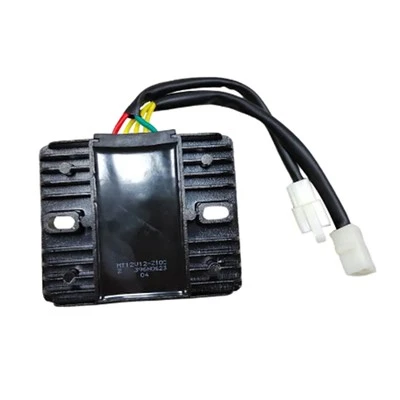
Let’s start with what a flasher actually does, because if you want to repair one, you need to understand how it works. A flasher is a small, unassuming electrical component that regulates the current to a vehicle’s or equipment’s exterior lights, making them blink in a consistent, safe pattern. There are three main types: thermal flashers, electronic flashers, and hybrid flashers. Thermal flashers are the oldest—they use a bi-metallic strip that heats up when current flows, bends, breaks the circuit, cools down, and repeats, creating the blink. Electronic flashers, the most common now, use a microchip to control timing, drawing minimal power and working with LED lights, which thermal flashers can’t handle well. Hybrid flashers mix both, for older vehicles being converted to LEDs.
Now, the big question: can a flasher be repaired? The short answer is yes, but only if the damage is minor and specific. The long answer depends on what’s broken, how old the part is, and whether repairing it makes sense financially and safely. Let’s break down the common issues we see, and whether they’re fixable.
First, thermal flashers. These are simple, so they have simple problems. The most frequent issue is a worn bi-metallic strip. Over years of heating and cooling, the metal fatigues, losing its ability to bend and reset consistently. Sometimes, the contact points inside the flasher become corroded, so current can’t flow properly. I’ve even seen thermal flashers where the plastic housing cracked after years of vibration from a work truck’s undercarriage, letting dirt and moisture get inside. For these, repair is often possible if the strip and contacts are intact. A skilled technician can gently sand the contact points to remove corrosion, re-bend the bi-metallic strip to its original shape, and seal the housing with a high-temperature silicone to keep out debris. But here’s the catch: thermal flashers are so cheap to replace—usually $5 to $10—that repairing them is often more trouble than it’s worth. I’ve had a customer bring in a 1998 Ford F-150 thermal flasher, swear up and down it was “perfect” when repaired, only for it to fail a month later on a highway, leading to a near-accident when the turn signal stopped blinking. Thermal flashers, in my experience, are rarely worth repairing long-term.
Next, electronic flashers—the workhorse of modern vehicles. These are far more complex, and their failure points are different. The most common issues here are a blown integrated circuit (IC), a loose solder joint on the circuit board, or a faulty power resistor. Sometimes, the flasher’s input or output terminals become corroded from exposure to moisture, especially on off-road equipment where they’re mounted directly to the frame. Repairing an electronic flasher is possible, but it requires specialized tools: a multimeter to test the IC and resistor, a soldering iron with a fine tip to rework tiny connections, and replacement parts that match the original specifications. I’ve seen our repair team fix electronic flashers for a local bus company that had a handful of units fail after a winter storm. The problem was corroded terminals—they sanded the pins, re-soldered a loose ground wire, and tested the timing to make sure it worked with their existing LED lights. Those flashers lasted two more years before being retired. But here’s the flip side: if the microchip itself is fried, or if the circuit board has a crack that’s too large to rework, there’s no way to repair it. Microchips are mass-produced for specific flasher models, and they’re not something you can source as a small replacement part—at least not at a cost that makes sense.
Hybrid flashers are the middle ground. They’re designed to work with both incandescent and LED lights, so they’re often used in classic car restorations or when someone upgrades their vehicle’s lights without replacing the flasher. Their failure points are similar to electronic flashers, but the components are often smaller and more sensitive. I had a customer last year who was restoring a 1967 Camaro and wanted to keep the original flasher but convert his turn signals to LEDs. His hybrid flasher stopped working, and he begged us to repair it because he didn’t want to replace a part that matched the car’s vintage. Our team tested it and found a faulty resistor—we sourced a matching resistor from a specialty electronics supplier, replaced it, and it worked. That repair cost him about $30, plus our labor, which was way cheaper than sourcing a vintage NOS (new old stock) flasher for $150. But that’s a niche case; most hybrid flashers aren’t worth repairing for modern, mass-produced vehicles.
So, when is repairing a flasher a good idea, and when is it better to buy a new one? Let’s go through the scenarios.
Repair is a good idea if: The flasher is part of a classic or vintage vehicle where replacement parts are scarce. That Camaro customer I mentioned is a perfect example—sourcing an exact matching flasher would have been hard and expensive, so repairing his old one made sense. Or if the flasher failed due to a minor, easily fixable issue like corrosion or a loose solder joint, and repairing it costs less than a new flasher. For example, a customer with a small utility trailer that uses an electronic flasher paid $15 to have his corroded terminals fixed, versus $8 for a new flasher—so that’s a wash, but at least he knew the existing unit was compatible with his trailer’s lights. Another scenario: if the flasher is part of a high-value piece of equipment, like a fire truck or a school bus, where downtime would cost thousands of dollars. If a minor repair gets the vehicle back on the road in an hour, instead of waiting for a new flasher to ship, that’s a no-brainer.
Repair is almost never a good idea if: The flasher is over 10 years old, even if it looks fine. Electrical components degrade over time, even when they’re not in use—moisture seeps in, metals corrode, and the plastic housing becomes brittle. I see this all the time with older pickup trucks: their flashers work one day, fail the next, and when you test the old unit, there’s hidden corrosion inside that would have caused it to fail anyway, even after a repair. Or if the flasher is designed for LED lights and the microchip is faulty—replacing the microchip isn’t feasible, and a new electronic flasher is reliable, long-lasting, and often just $10 to $20. Finally, if repairing the flasher costs more than half the price of a new one, skip it. I’ve had customers turn down our repair service because it would cost $40 for labor, when a new flasher is $12. That’s a no-brainer.
As a flasher supplier, I’ll be honest: we don’t offer a flasher repair service. Why? Because for most of the market, it’s not economically viable. We source flashers from reputable manufacturers that test every unit for timing, current flow, and durability, so a new flasher will last 5 to 10 years, if not longer. A repaired flasher, on the other hand, might last 6 months to 2 years, depending on the damage, and could fail at the worst possible time—like when you’re driving on a dark highway at night, or when a bus is picking up kids. Safety is our top priority, so we’d rather sell a new, tested flasher that we stand behind, than a repaired one that might cause problems down the line.
That said, we do work with customers who have older or specialty flashers that need repair. We’ll often point them to local electronics repair shops that have the tools and expertise to fix small electrical components, and we’ll even help source replacement parts if needed. For our fleet clients, we also offer bulk pricing on new flashers, which is a big help when you have 50 work trucks that all need new units. We make sure our flashers are compatible with every make and model we sell, whether it’s for a 20-year-old semi-truck or a new electric vehicle.
I’ve learned over the years that customers often think a flasher is just a “cheap part” that doesn’t matter. But last year, I had a customer who brought in a new flasher he’d bought from a discount parts store—he said it was $3 cheaper than ours. A week later, he emailed to say his turn signal stopped working on the way to a job site, and he’d gotten a $200 ticket for a defective light. When he tested the cheap flasher, we found its timing was off, so the lights blinked too fast, which meant the inspector had marked it as defective. That’s when I realized: a flasher isn’t just a part—it’s a safety feature. Cutting corners on a cheap, untested flasher, or trying to repair one that’s beyond saving, can lead to expensive tickets, accidents, and downtime.
So, to circle back to the original question: Can a flasher be repaired? The answer is, sometimes, but only if the damage is minor, the part is worth saving, and the repair is safe and cost-effective. But more often than not, replacing it with a new, tested flasher is the better choice for reliability, safety, and peace of mind.

If you’re unsure whether your flasher can be repaired, or if you need a new one that’s compatible with your vehicle, equipment, or trailer, don’t hesitate to reach out to us for assistance with your next flasher procurement. We can help you assess your needs, compare options, and find a solution that works for your budget and timeline.
Motorcycle Electric Starter Motor References
- Society of Automotive Engineers. (2018). Lighting Systems and Components for Passenger Vehicles and Light Trucks. SAE International.
- Automotive Electronics Council. (2020). Reliability Guidelines for Electronic Components in Underhood Automotive Applications. AEC-Q100.
- National Highway Traffic Safety Administration. (2019). Motor Vehicle Safety Standards: Lighting Devices, Reflective Devices, and Associated Equipment. 49 CFR Part 571.108.
- Industrial Vehicle Technology Association. (2021). Electrical Component Maintenance Guidelines for Off-Highway Equipment. IVTA Publication 21-003.
Maixing Electromechanical Co., Ltd.
As one of the most professional flasher manufacturers and suppliers in China, we warmly welcome you to wholesale discount flasher for sale here from our factory. All customized products are with high quality and low price. Contact us for quotation and free sample.
Address: No.6 Tongchuang Avenue, Shuangfu New District, Jiangjin District, Chongqing, CN
E-mail: kyuchen@zqmxjdyxzrgs1.wecom.work
WebSite: https://www.mx-electrical.com/
