Hey everyone, if you’re in the heat of buying or upgrading a corrugated fin forming machine, you know how confusing it can be to tell a “good” machine from one that’s just hype. I’ve been selling these machines for 7 years, and I hear the same questions every week: “How do I actually measure if this machine is worth the cash? It’s not just about making fins, right?” Spoiler: You’re 100% right. There’s way more to it than cranking out a piece of metal. Let’s break this down like we’re chatting over a coffee (or a cold one, no judgment), no jargon overload, no fancy corporate fluff. Corrugated Fin Forming Machine
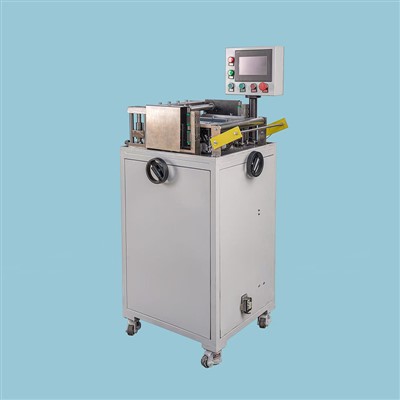
First off, let’s get one thing straight: corrugated fins are the tiny, wavy metal bits inside heat exchangers—think AC units, radiators, even industrial refrigeration. If those fins are garbage, the whole system sucks. So when we’re measuring performance, we’re not just talking about speed (though that matters). We’re talking about how consistent the machine is, how much waste it spits out, and how easy it is to actually use. Let’s start with the big one that most buyers skip at first: part dimensional accuracy.
Wait, I know what you’re thinking—“I just need my fins to fit.” But let’s get specific. When a fin is corrugated, it has two key measurements: pitch (that’s the space between each wave, right?) and height of the wave. If your pitch is off by even 0.1mm, those fins won’t stack right inside the heat exchanger, and suddenly your system’s efficiency drops by 15-20%—I’ve seen it happen. So how do you measure this? Yeah, you use a caliper or a coordinate measuring machine (CMM) for precision, but here’s the real test: run the machine non-stop for an hour, then pull 50 random fins from the first minute, the middle, and the last minute. If 95% of those have a pitch within ±0.05mm of your target, that’s solid. If the first fin is perfect, the last one’s 0.2mm off? That machine’s not holding tolerances, and you’ll be reworking fins for weeks. I once had a customer come to me after buying a cheap machine that had pitch varying by 0.3mm—they were throwing away 30% of their output. Don’t be that guy.
Next up: material versatility. A lot of people buy a machine that only works with aluminum, but what if you need to switch to copper? Or even thin stainless steel for some industrial projects? That’s where the machine’s forming force and roller design come in. Let’s be real, most suppliers will tell you their machine does everything, but put it to the test. Grab a roll of your go-to material, plus another one you might use in the next year, and run it through. Does the fin form without cracking? No edge curling? And—super important—does the machine adjust easily to switch between materials, or do you have to swap out half the parts? If it takes 2 hours to switch from aluminum to copper, you’re wasting so much downtime. One of our newer machines has quick-change roller sets that take 10 minutes max, and that’s a big selling point for people who run short batches. I’ve seen competitors’ machines that can handle 3 materials but take all day to switch—total headache.
Now, the one number everyone obsesses over: production speed. But here’s the catch—speed doesn’t matter if you’re getting junk parts. Let’s clarify: we measure “net speed,” not just how fast the feed roll spins. Net speed is the number of good, dimensional fins you make per hour, minus downtime for jams, reworks, or adjustments. A machine that runs 100 fins per minute but has a 10% jam rate is worse than one that runs 80 fins per minute with a 2% jam rate. Let me give you an example: last quarter, a customer compared our machine to a competitor’s. Competitor’s ad said 120 fins per minute, but when they ran it, it jammed every 15 minutes, and 10% of fins were off-spec. Our machine did 90 fins per minute, no jams, 99% good parts. Over an 8-hour shift, that’s 34,560 good fins vs. the competitor’s 28,800. Way more output, less waste. Always ask for a live demo where you run the machine for at least 30 minutes, not just a 2-minute sales pitch. That’s where the real speed numbers show up.
Waste rate is another big one, and it’s tied directly to accuracy and versatility. Waste isn’t just the scrap off the ends of the metal roll (though that adds up too)—it’s the fins you have to toss because they’re crooked, wrong size, or cracked. A good corrugated fin forming machine should have a waste rate of under 3%. I’ve seen cheap machines with 15% waste—you’re throwing away thousands of dollars in metal every month, that’s a huge hidden cost. How do you calculate that? Run the machine for 4 hours, weigh the total metal feed, then weigh the good fins, and subtract to get waste weight. 100kg feed, 97kg good fins = 3% waste. That’s the benchmark. If a machine can’t hit that, walk away. I had a customer once tell me their old machine had 12% waste, so switching to our machine saved them $12k a month in scrap. That’s way more important than a $5k discount on a cheap machine.
Okay, let’s talk about reliability and uptime—because if your machine is down, you’re not making money. How do you measure that? Track mean time between failures (MTBF) and mean time to repair (MTTR). MTBF is how long the machine runs on average before it breaks or needs a major adjustment. MTTR is how fast you can fix it when something goes wrong. For our machines, MTBF is over 1,500 hours of continuous operation, and MTTR is under 2 hours—we ship replacement parts next day, and our techs are on site within 48 hours if needed. A lot of budget machines use cheap bearings and electrical components, so their MTBF is like 200 hours. That means every week, you’re shutting down to fix something. Not worth it. I always ask potential customers: what’s your downtime cost per hour? If you make $500 an hour running, a $10k cheaper machine that’s down 100 hours a year costs you $50k. Math doesn’t lie.
Wait, we can’t forget about fin quality beyond dimensions—like surface finish and corrugation consistency. If the fin surface is too rough, it can cause friction in the heat exchanger, reducing efficiency. Also, how uniform are the corrugation peaks and valleys? If some peaks are taller than others, you’ll have gaps between fins, which kills heat transfer. The easiest test here: run a fin through your hands, look at the corrugations under a magnifying glass, and check for any cracks or burrs. Burrs are a big deal—they can puncture other parts in the heat exchanger, leading to leaks. A good machine will have rolling dies that are sharp and properly tensioned, so burrs are almost non-existent. I once had a customer say their old machine left burrs that required hand deburring, adding 10 minutes per fin. That’s not just waste, that’s extra labor cost. Our machines produce burr-free fins 99% of the time, so no hand work needed.
Oh, and let’s touch on automation and data tracking—this is a newer thing, but super important now. Modern machines can track how many fins they’ve made, detect dimensional errors in real time, and even adjust the roller tension automatically if there’s a material variation. So you don’t have a tech checking every fin, you just get an alert if something’s off. When measuring performance here, it’s not that you need the fanciest AI, but how well the automation works. If the error detection is 100% accurate and doesn’t flag good parts, that’s a win. If it’s too sensitive and stops every time there’s a tiny material variation, that’s a pain point. We built our machines with smart sensors that only flag actual defects, not normal material quirks, so they keep running without stopping.
Wait, let’s make sure we’re not missing something from a user perspective—operator ease. How easy is it to set up the machine? Can a new operator learn it in a day, or do you need a specialist? If it takes weeks to train someone, that’s extra cost. When I demo our machines, I have a new operator who’s never used one before set up and run a fin in 45 minutes. Compare that to other machines that take 4 hours to set up. That’s performance too—because if your team can’t run it, all the speed and accuracy don’t matter.
Let’s wrap this up with a quick checklist you can take with you, no matter who you’re talking to: 1) Check dimensional accuracy (±0.05mm pitch/height, 95% of 50 random good parts), 2) Test material versatility (switch between your go-to and future materials in <15 mins), 3) Net production speed (compare good fins per hour, not just advertised speed), 4) Waste rate (<3% over 4 hours), 5) Reliability (ask for MTBF/MTTR numbers, not just “it’s reliable”), 6) Fin quality (no cracks, burrs, consistent corrugations), 7) Operator time to train.
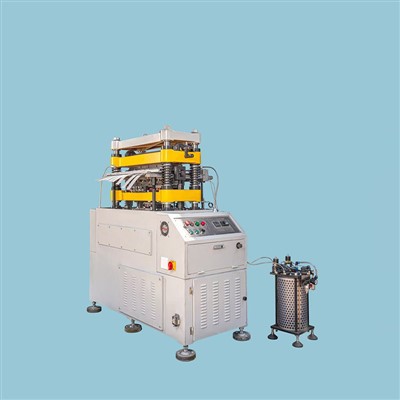
Here’s the thing: I’ve been doing this long enough that I see a lot of buyers get stuck on the upfront cost, but the long-term performance is what makes or breaks your business. A corrugated fin forming machine is a capital investment, not a toy. Don’t buy based on flashy specs or cheap price. Test it, run it for real, ask the hard questions. If you’re in the market and want to chat through this more, or see a live demo that works with your specific materials and needs, hit me up and we can figure out what’s right for you. No pressure, no sales pitch that’s too good to be true—just straight talk about getting a machine that actually makes your business run smoother.
Fin Press Machine References: 1. Heat Transfer Research, Inc. (HTRI). “Fin Dimensional Tolerance Effects on Heat Exchanger Efficiency.” 2021. 2. Industrial Machinery Digest. “Key Performance Metrics for Metal Forming Equipment.” 2022. 3. Global Heat Exchanger Manufacturers Association. “Best Practices for Corrugated Fin Production Equipment Evaluation.” 2020.
Suichang Lvye Machinery Co., Ltd.
We are one of the most professional corrugated fin forming machine manufacturers in China, also support customized service with low price. We warmly welcome you to buy discount corrugated fin forming machine for sale here from our factory. If you have any enquiry about quotation, please feel free to email us.
Address: No. 402, Mudanting East Road, Miaogao Street, Suichang County, Lishui City, Zhejiang Province
E-mail: L528753@outlook.com
WebSite: https://www.suichanglvye.com/
