Hey there, thanks for dropping by. For the past seven years, I’ve stood right in the middle of the industrial cooling game—first as a tech on the floor fixing air compressor coolers, now as a supplier you’d catch in your warehouse at 8 a.m., holding a notepad and asking way too many questions about your specific setup. Most days, I hear the same confusion: folks adjusting their compressor’s pressure and wondering why their cooler’s suddenly underperforming. The piece of the puzzle that’s missing more often than not? The compression ratio. It’s not just a number on a spec sheet—it’s the invisible thread tying your compressor’s efficiency to how well your cooler keeps things running cool, especially when you’re pushing hard. Let me break this down like I would for a client who’s just shut down a line over overheating, no jargon, no fluff. Air Compressor Cooler
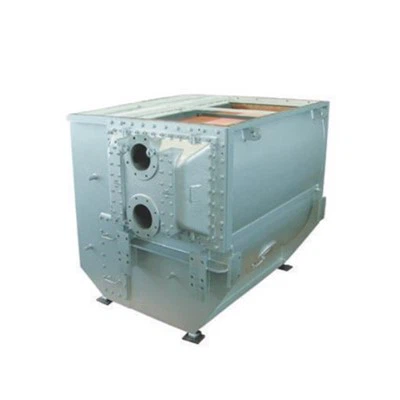
First, let’s get super clear on what we’re talking about here. Your air compressor compresses ambient air, right? Pulls in cool, 14.7 PSI air at about 60°F from the loading dock, squeezes it down to a higher pressure so it’s ready to power tools, fill tanks, or whatever your operation needs. The compression ratio is the simple math of that: it’s the absolute discharge pressure (the pressure of the air coming out of your compressor, before it hits the cooler) divided by the absolute suction pressure (the pressure of the air going in). For most shop compressors running at standard atmospheric pressure, that suction pressure is pretty much 14.7 PSIA, so you just take discharge PSIG and add 14.7 to get the absolute number. So if your compressor’s pushing 100 PSIG, that ratio works out to (100 +14.7)/14.7 = roughly 7:1. That’s the ratio we’re dealing with here for most small-to-medium industrial setups, and it’s the one I see shifted way too often without anyone stopping to check the cooler.
I’ve seen it happen last quarter with a local automotive parts fab. They’d upgraded their air tools to run at higher pressure to get more torque, so they cranked their compressor up from 100 PSIG to 120 PSIG, bumping that ratio from 7:1 to around 8.8:1. Three days later, their aftercooler’s pressure gauge spiked, and the line shut down—air temperature going into the tools hit 220°F, way over the 180°F their machinery specs allowed. When I got there, the techs were complaining their old cooler was “broken”; I checked the compressor settings first. That ratio jump changed everything. Why? Because when you squeeze air harder, it doesn’t just get smaller in volume—it gets way hotter. The basic gas law (I promise this is the only textbook line you’ll get today) says for a fixed amount of gas, pressure and temperature are directly related when volume changes: if pressure goes up, temperature goes up too. A higher compression ratio means a bigger squeeze, so way more heat is generated right at the compressor’s outlet. That’s heat your cooler has to dissipate. I can’t tell you how many times I’ve pulled a tech away from replacing the cooler core only to show them the spike in discharge pressure on their compressor display. It’s like turning up the heat in a room and blaming the air conditioner for not keeping up—same logic here.
But it’s not just “more heat = cooler works harder.” There’s a layer of science that catches even experienced ops managers off guard. When that superheated compressed air hits the cooler, two things are happening at once: the air is trying to cool down to its target operating temp, and any water vapor that was in the ambient air (and gets compressed along with it) condenses into liquid water. The cooling process relies on the air being able to transfer that heat to whatever’s outside the cooler—whether that’s ambient air for an air-cooled cooler or water for a water-cooled one. When the compression ratio is too high, two problems show up here. First, the higher discharge temperature means the air has to give off more BTUs (that’s the unit of heat, for the non-engineers) to get down to a safe temp. My company’s cooler sizing calculator—we’ve tweaked it 12 times over the last three years because of clients like that auto fab—shows that a 1.8:1 ratio jump (like their 100 to 120 PSIG) adds about 25% more heat load to the cooler. Second, at higher pressures, the water vapor in the compressed air is more likely to stay in gaseous form at those higher temps, right up until the air hits the cooler. That means more moisture to remove, which adds another layer of work for the cooler—more air to push through the core, more condensation to drain, more surface area needed to pull all that extra heat and moisture out. The auto fab’s original cooler was sized for a 7:1 ratio; when they bumped it to 8.8:1, it was like asking a backpack cooler to keep 10 cold sodas cool instead of 8—no wonder it couldn’t keep up.
Now, let’s flip the script. What if the compression ratio is too low? I get this too, especially with clients who oversize their compressors. They’ll buy a unit that’s way bigger than they need, and run it partially unloaded to keep pressure low. I worked with a woodworking shop last winter that did this—their compressor was a 25 HP unit, but they only needed 15 HP of output, so they ran it at 70 PSIG instead of their typical 100, dropping their ratio to (70+14.7)/14.7 = about 5.8:1. Their cooler was a brand-new air-cooled unit, but they started noticing it was freezing up overnight when temperatures dropped, and their air lines were holding too much moisture. Why? At lower compression ratios, the compressed air has a lower temperature at the outlet (all that heat from squeezing is gone). Wait, but that sounds like a good thing, right? No, not when it comes to moisture. The saturation point of air (how much water vapor it can hold) goes down as pressure goes down, even if temperature is the same. So when you compress at a lower ratio, the air is still holding a lot more water vapor than it would at a higher ratio. For that woodworking shop, the cooler was set up to only handle the extra heat from high ratios, not the extra moisture from a low ratio. When the outside air got cold, the cooler’s fins couldn’t dissipate the tiny amount of heat fast enough, and the moisture froze, blocking air flow. They ended up adding a pre-heater to the cooler inlet that matched their new, lower ratio setting—something we tested and customized for them, no one-size-fits-all fix here. That’s the thing about coolers: they’re not one-size-fits-all, and that ratio is the key customizing factor.
Let’s talk real-world performance numbers, because I know you guys care about uptime and bottom lines more than equations. I did a side-by-side test with a food processing client who has two identical lines, each with the same compressor and cooler. Line 1 runs at a steady 7.2:1 ratio (100 PSIG, 62°F suction air), Line 2 runs at 8.5:1 (110 PSIG, same suction air). We tracked their discharge air temp, cooler run time, and line downtime over 60 days. Line 1’s average discharge air temp was 182°F, right in their safe zone; Line 2’s average was 211°F. Line 1’s cooler cycled 40% less than Line 2’s, which means less wear and tear on the cooler motor, longer core life. Line 2 had two unplanned shutdowns for overheating, Line 1 had zero. The kicker? Line 2’s compressor used 8% more energy to run at that higher ratio. That’s not just cooler performance— that’s your operational cost tied straight to compression ratio. Higher ratios don’t just work the cooler harder, they make your whole compressor less efficient, too.
I get that operations teams are busy—you’ve got production schedules to hit, maintenance to plan, and you don’t have time to dig into thermodynamics every time you adjust a pressure setting. That’s why my team’s whole approach to being your cooler supplier isn’t just dropping off a unit and leaving. When we work with you, the first thing we ask is: what’s your typical compression ratio, how much ambient air do you pull in, what’s your operating environment, and what’s your maximum allowable discharge air temp? We don’t just sell a cooler off a catalog—we adjust core size, fin spacing, even the type of coolant to match your exact ratio. For that auto fab client, we swapped their standard 120°F rated cooler core for a larger surface area model, added a variable speed fan that adjusts based on discharge temp, and calibrated their compressor pressure setting to keep the ratio right around 8:1 instead of 8.8. After that, their discharge temp dropped to 190°F, no more shutdowns, and their cooler’s energy use went down 15% because the fan wasn’t running at full blast all day. For the woodworking shop, we installed a low-temperature bypass valve that adjusts the air flow through the cooler when ratios drop below 6:1, so it doesn’t freeze up in winter while still handling the moisture load.
The biggest mistake I see people make is treating their compressor and cooler as separate pieces of equipment. They’re a team, like a driver and a car—mess up one gear ratio, and the whole ride breaks down. A compression ratio that’s too high means your cooler is dissipating more heat than it was designed for, leading to overheating, higher maintenance, even premature cooler failure. A ratio that’s too low means your cooler is working harder to remove excess moisture, leading to corrosion in your air lines, frozen components, or consistent product defects (like that woodworking shop’s warped lumber from excess moisture in the air lines). The sweet spot? It’s not just the “standard” 7:1 everyone quotes. It’s tailored to your operation, your ambient conditions, and what you’re powering with that compressed air.
I’ve been doing this long enough to know that specs don’t tell the whole story. A cooler that’s perfect for a metal stamping shop running 24/7 at 8:1 ratio will be a disaster for a bakery running at 6:1, because bakeries have higher humidity in the ambient air, so more moisture to handle. That’s why taking the time to map out your ratio is non-negotiable. Last month, a packaging client came to me saying their new custom boxes were getting damaged by moist air—turns out their new compressor was running at 5.5:1, way lower than their old unit’s 7:1, and their cooler wasn’t sized for the extra moisture. We adjusted their ratio (by adding a small trim valve to make the compressor hold pressure at 95 PSIG instead of 80) and swapped out their cooler’s drain system to handle more condensation, and the box damage stopped overnight. No new cooler needed, just a tiny tweak to their ratio and the drain.
At the end of the day, your cooler’s performance lives or dies by that compression ratio. It’s the invisible link, the number that’s on your compressor screen but rarely gets talked about until something breaks. If you’re noticing overheating, excess moisture in your air lines, unplanned downtime, or your cooler seems like it’s working way too hard for the job, don’t just reach for your phone to call a tech to fix the cooler. Stop for 10 minutes, check your compressor’s discharge pressure, calculate that ratio, and give us a shout. We don’t do generic cooler sales—we work with you to adjust that ratio, size the right cooler, and make sure every part of your compressed air system is working in sync. No one-size-fits-all, no jargon, no surprises. Just a cooler that keeps your line running cool, and your costs low.

If you’re looking to optimize your system, adjust your compression ratio for better cooler performance, or just want to run through your current setup, we’re here to help. Get in touch with our team to discuss your needs and find the right solution for your operation.
Kaeser Compressor Cooler References:
ASHRAE Handbook—HVAC Systems and Equipment, Chapter 23: Compressed Air Systems
Compressed Air and Gas Institute (CAGI) Standard 100-2019: Compressed Air Aftercoolers and Dryers
Geng, Q., et al. (2021). Performance Analysis of Air Compressor Aftercoolers Under Variable Compression Ratios. International Journal of Thermal Sciences, Volume 162
Changzhou Vrcooler Refrigeration Co., Ltd.
Changzhou Vrcooler Refrigeration Co., Ltd. is one of the most professional air compressor cooler manufacturers and suppliers in China, specialized in providing high quality aftermarket service. Please rest assured to buy high-grade air compressor cooler for sale here from our factory. For price consultation, contact us.
Address: No. 18-69,Changwu Zhong Road, Wujin district, Changzhou, Jiangsu
E-mail: info@vrcooler.com
WebSite: https://www.vrcooler.com/
