Hey there, fellow manufacturing folks! Let’s cut to the chase – we all know heavy machinery makes noise, uses loads of power, and leaves a mark on the planet. But if you’re deep in the game of big-part machining, you’ve probably heard of gantry machining centers, and maybe you’ve wondered: just how much environmental impact does one of these beasts actually have? As a gantry machining center supplier, I get that question a lot, and it’s way more nuanced than “it’s loud and uses electricity.” Let’s break this down like we’re geeking out over a shop floor audit – no stuffy jargon, just real, actionable stuff you care about. Gantry Machining Center Machine
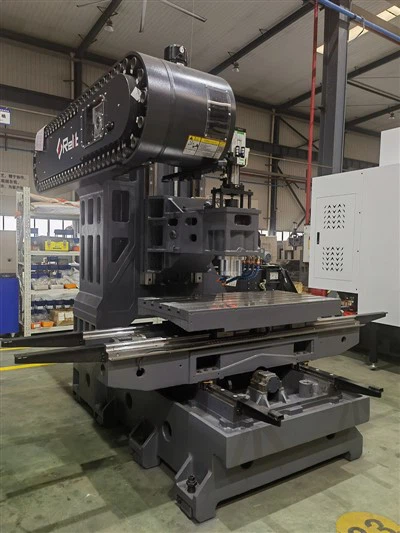
First, let’s set the scene: gantry machining centers aren’t your average 3-axis mill that fits in a small shop. These things are massive – think 10+ feet of travel on X, Y, Z axes, built to machine huge parts like aerospace engine casings, heavy equipment frames, or wind turbine hubs. So their footprint? Way bigger than your standard CNC machine. But here’s the thing – impact isn’t just about how they run on the job site. It starts the second you dig up the raw materials to build them, and doesn’t end when they retire.
Let’s start with the big one: upfront embodied carbon. That’s the carbon emissions tied to making the machine itself, from raw material extraction to the factory floor where we assemble them. A typical gantry center is 20,000 to 80,000 pounds of cast iron, steel, aluminum, and high-performance components like linear guides or spindle motors. Cast iron, which is the backbone of most gantries for its rigidity, is energy-intensive to make. Producing one ton of cast iron releases about 2.2 tons of CO2, right? And we’re talking several tons of that per machine. Add in the steel frames, copper wiring, and all the electronic control systems, and you’re looking at a one-time embodied carbon cost of 50 to 200 tons of CO2 equivalent for a single gantry. That’s a huge chunk, and it’s easy to brush off as “just the cost of doing business” – but that’s exactly the kind of thinking we’re pushing back on. As a supplier, we’ve been tweaking our design and supply chain for years to lower this: switching to recycled cast iron (which cuts embodied carbon by 30-40% vs. virgin iron), sourcing steel from mills that run on renewable power, and even working with component makers that use less energy in their part production. It’s not just greenwashing – we’ve tracked every part of this, because our clients (especially aerospace and defense, which have strict sustainability targets) are asking for that data now.
Next up: operational energy use, which is where most people focus – and honestly, where the biggest wins (and risks) are. Gantry machines are power hogs, no question. A mid-sized gantry might draw 30-50 kW when idling, and 75-150 kW during heavy cuts like roughing titanium or steel. That’s 10 to 50 times more power than a small desktop CNC. But here’s the kicker: their actual energy intensity depends way more on how you use them than the machine itself. A lot of old-school gantries run inefficient spindle motors, use constant coolant flow no matter the cut, and don’t have smart controls to ramp down power when they’re idling between operations. That’s a waste. Newer models – and the ones we build – have variable frequency drives (VFDs) that adjust spindle speed and power to the material and cut, energy-efficient servo motors, and even auto-shutoff features for idle periods. We had a client in the wind energy space test one of our gantries vs. their old 10-year-old model, and they cut energy use by 35% on average. That’s not chump change – that adds up to thousands of dollars in utility bills and thousands of tons of CO2 a year per machine, depending on where your power comes from. If your grid runs on coal, that 35% cut is a way bigger environmental win than if you’re on 100% hydro, but either way, it’s savings for your bottom line.
Wait, let’s not forget about coolants and lubricants. Gantry machining centers use tons of cutting fluid – we’re talking 500 to 2,000 gallons for a standard setup, and that stuff is tricky. Traditional mineral-oil based coolants are petroleum-derived, can leach into water if not disposed of right, and need regular changing because they break down from heat and metal shavings. Improper disposal is a big no-no for the EPA and global environmental regs, not to mention it’s costly. But again, this is a fixable thing. We’ve started offering near-dry machining systems for our gantries, which use minimal coolant (like a half-pint per hour vs. gallons) plus compressed air to cool the cutting zone. That cuts coolant waste by 90% or more, and some shops even switch to biodegradable synthetic coolants that are easier to recycle. We also design our machines with sealed coolant systems and easy filtration, so shops can extend coolant life by 20-30% without losing cut quality. Small stuff, but adds up.
Then there’s the less talked about impact: the waste from machining itself. Gantries process huge parts, so they generate big metal chips – tons of them per month, sometimes. A single titanium part for an aerospace jet might have 70% of the raw material removed as chips. Those chips used to be a pain – shops would pile them up, send them to a scrap yard, but wait a second: if you’re sending virgin metal to make a part, and 2/3 of it becomes scrap, that’s more upfront embodied carbon we talked about earlier. But here’s the thing: good gantry programming can cut that scrap. Our gantries work with CAD/CAM software that optimizes tool paths, so you’re not cutting extra material, and some models even have chip conveyors that separate the metal from coolant, so the chips can be recycled back into new metal with minimal processing. We’ve even had clients send us their chip recycling rates as a KPI, so we help them tune their machine settings to get more pure, recyclable chips. It’s not zero waste, but it’s a way to turn a byproduct into a revenue stream instead of landfill.
Now, let’s get real about the other side: when a gantry reaches the end of its life. The average gantry machining center runs 10-20 years, maybe longer if you maintain it right. When it’s time to replace it, what happens to it? Old gantries often end up in a junkyard, where all that cast iron and steel gets buried or smelted again. But we’ve been pushing for circular design here. Our machines are modular – so when a part wears out, you replace just that part, not the whole thing. The linear guides, motors, and control systems are all standardized, so we can refurbish them for resale instead of throwing them away. We even have a take-back program: when a shop is ready to trade in an old gantry, we tear it down, recycle 85-90% of the materials (steel, cast iron, aluminum, even the copper wiring), and send only the non-recyclable parts to proper hazardous waste facilities. That’s way better than letting those metals sit in a landfill for decades.
Wait, let’s address the elephant in the room: is a gantry machining center worth the environmental tradeoff? Like, sure, it has a bigger footprint than a small mill, but it’s also built for high-volume, high-precision big parts. A single gantry can do the work of 3 or 4 smaller mills, right? So instead of buying multiple machines, which would multiply embodied carbon and energy use, you have one more efficient machine that outputs way more finished parts. That’s a key point I don’t see many other suppliers bring up. For example, a wind turbine hub needs to be machined to within a few thousandths of an inch – you can’t do that with a regular mill. So the gantry isn’t just a tool, it’s a enabler for parts that make renewable energy work. Wind turbines, electric vehicle frames, aerospace components – these are all part of the solution to climate change, and gantries make those parts possible. It’s a balance, not an excuse.
Of course, there are still gaps. No machine is perfect. Even our most efficient gantries use power, and if a shop is running them 24/7 on a grid with high emissions, that’s still a problem. But that’s where we come in as a supplier. We don’t just sell you a machine and dip. We work with our clients to audit their current operations, tweak their gantry settings, help them connect to renewable energy options, and even upgrade old machines instead of buying new ones. We’ve done retrofits that add VFDs and smart controls to 10-year-old gantries, cutting their energy use by 25% – way more cost-effective than a new machine, and way lower embodied carbon than building a new one.
Let’s wrap this up, because I know you’re busy. The environmental impact of a gantry machining center isn’t a black and white number – it’s a story that starts with design, runs through every cut you make, and ends with how you retire it. The upfront embodied carbon is real, but you can cut that with recycled materials and smart supply chains. Operational energy use is the biggest day-to-day impact, and modern gantries are way more efficient than old models, especially when paired with good shop practices. Coolant waste, chip waste, end-of-life disposal – all of these have solutions that don’t require sacrificing performance or precision, which is non-negotiable for machining big parts.

At the end of the day, we’re all in this together. Manufacturing is what builds the world, but we can build it smarter. If you’re in the market for a gantry machining center, or you’re looking to audit the one you have and lower its environmental footprint, let’s chat. We don’t do pushy sales pitches – we do real, tailored advice, whether that means buying a new machine, retrofitting your old one, or tweaking how you run your shop. No generic solutions, just what works for your parts, your budget, and your sustainability goals. Let’s turn that big machine’s footprint from a burden into an asset for your business and the planet.
Vertical Machining Center Frame References:
- United States Environmental Protection Agency. (2022). Sustainable Manufacturing and Resource Efficiency: Metalworking Fluids & Cutting Tools.
- World Steel Association. (2021). Carbon Footprint of Steel Production: Global Data Report.
- American Foundry Society. (2023). Embodied Carbon in Cast Iron Components for Industrial Machinery.
- International Energy Agency. (2022). Energy Efficiency in Industrial Machine Tools.
- Circular Economy Action Plan for Industrial Machinery. (2020). European Commission Directorate-General for Internal Market, Industry, Entrepreneurship and SMEs.
- Machining Data Handbook. (2021). Tool Path Optimization for Material Waste Reduction in Large Part Machining.
Smartech Machinery & Equipment Co., Ltd.
As one of the most professional gantry machining center machine manufacturers and suppliers in China, we also support customized service. Please rest assured to buy bulk gantry machining center machine made in China here from our factory. Contact us for more details.
Address: Room 2832, Changping Commercial Mansion, Shihua Road, Futian Free Trade Zone, Shenzhen, China
E-mail: smartech@smartechcnc.cn
WebSite: https://www.smartech-cnc.com/
