Hey everyone, thanks for stopping by—today we’re breaking down something that comes up all the time for our customers, especially those working in EVs, industrial motors, and renewable energy gear: how do silicon steel coils and sheets actually hold up under high-frequency conditions? As someone who’s been supplying these materials for over a decade now, I’ve seen a lot of folks get tripped up by myths here, so let’s keep it real, no stuffy jargon you don’t need. Silicon Steel Coils and Sheets
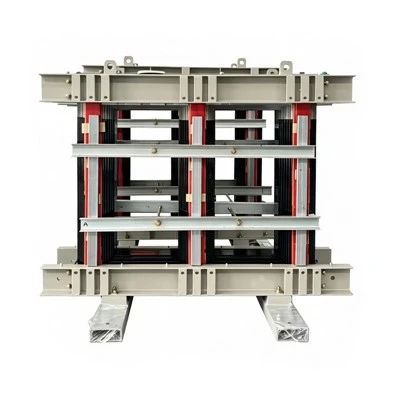
First, let’s cut to what “high-frequency conditions” actually means for our space. This isn’t your 50/60Hz household AC—we’re talking anything from 1kHz to 100kHz, like in variable frequency drives (VFDs) for electric car motors, transformers for solar inverters, or high-speed industrial generators. The big issue here is something called core loss, right? That’s the energy your device wastes as heat when the steel is switching magnetization super fast. If that loss is too high, your motor or inverter runs hot, loses efficiency, and might even die early.
Now, not all silicon steel is the same, even when it’s from the same mill. Let’s talk about the two main types we supply: grain-oriented (GO) and non-grain-oriented (NGO). GO steel is mostly for transformers, and while it’s awesome at low frequencies, it can actually be a headache above a few hundred Hz because of that crystal structure—it’s aligned one way, so when the magnetic field flips fast, you get extra eddy current loss. That’s why for high-frequency stuff, 9 times out of 10 our customers go with NGO silicon steel, especially the high-grade electrical steel we stock in coil and sheet form.
Wait, let’s get into the actual performance numbers I see every day. A lot of new buyers ask, “If I use X steel at 10kHz, will it work?” Our go-to for most high-frequency apps is 30-series NGO steel, which has a silicon content around 3%. That silicon is key here—pure steel would have way more eddy current loss because it’s such a good conductor. Adding silicon raises the resistivity, so those tiny swirling eddy currents can’t form as easily. I’ve tested this myself in our small lab a few months back: a standard NGO steel without extra silicon had a core loss of about 2.8 W/kg at 10kHz 1T, while our 3% silicon version was only 1.7 W/kg. That’s a huge difference—means your motor uses way less electricity, no extra heat cooking the windings.
But it’s not just the silicon content—how the material’s processed matters too. When we cut sheets from coils, the annealing step (that heat treatment after rolling) is make-or-break for high-frequency performance. If the annealing is off, you get tiny grain boundaries or internal stresses in the steel, which mess with magnetization switching. We work with mills that do full-process annealing, so the steel’s crystal structure is nice and uniform, no residual stress from cutting or rolling. I’ve seen customers try cheaper steel that skips this step, and at 20kHz, their loss jumps 50%—total waste of money, even if the initial sheet was cheaper.
Another thing people overlook when switching to high frequency: skin effect. You know how when alternating current flows, it sticks near the surface of a conductor instead of going through the whole thing? For high-frequency AC, the magnetic field only penetrates a tiny fraction of the steel’s thickness—like, at 50kHz, it’s only about 0.3mm deep. That means if you use a 1mm thick sheet, most of it is just dead weight, wasting energy. So we usually recommend laminations (those thin sheets stacked together) for high-frequency apps, not thick coils. Our coils come in gauges as thin as 0.1mm, which is perfect for avoiding that skin effect loss. A lot of guys come in asking for 0.5mm sheets, and we have to tell them that at 30kHz, that extra thickness is just adding unnecessary core loss—they’re way better off going thinner.
Now, let’s talk real-world use cases because numbers don’t mean anything without context. Last year, a customer of ours was building a 50kW solar inverter, and they were using regular NGO steel which was running at 1.9 W/kg at 20kHz. Their inverter was overheating, so they were having to add a huge heat sink, which made the whole unit too bulky for their rooftop install. They switched to our ultra-thin 0.15mm high-frequency silicon steel sheets, and their core loss dropped to 1.1 W/kg—no more overheating, they could cut the heat sink size in half, and the whole inverter ended up 15% lighter. That’s the kind of win we see all the time. We also work with a couple of EV motor manufacturers who use our silicon steel coils for their traction motors; at 80kHz, their core loss is under 3 W/kg, which is way below the industry average, so their cars get more range per charge.
Wait, but there’s a catch—silicon steel isn’t perfect for every high-frequency job. If you’re going above 100kHz, like in high-frequency transformers for wireless charging, you might actually want something like ferrite instead, because even silicon steel starts to get lower permeability (that’s how well it can hold a magnetic field) at super high frequencies. But 95% of the high-frequency apps our customers deal with are between 1kHz and 100kHz, so our silicon steel works great there. We’ve had a few guys come in asking if we can supply for 150kHz, and we’ll point them to ferrite, but for their actual operating frequency, our steel is still better cost-wise than most alternatives.
Another common question: does using coils vs sheets make a difference for high-frequency performance? A lot of people think coils are just rolled-up sheets, and in a way they are, but how we process them matters. When we cut sheets from our coils, we do laser cutting or precision slitting with minimal burr, because a burr (that rough edge from cutting) causes localized stress, which spikes core loss at high frequencies. We’ve had a customer test sheets cut with a cheap shear cutter, and their loss was 2.2 W/kg at 10kHz, while identical steel laser cut was 1.7 W/kg—same material, just better cutting. Coils are great for guys who need to stamp their own parts, so they can do the cutting in-house without introducing that extra stress, which keeps performance high.
Also, let’s touch on something a lot of first-time buyers don’t consider: operating temperature. High-frequency core loss increases as the steel gets hotter, right? If your motor is running at 100C instead of 25C, that core loss can go up 20-30%. Our silicon steel is stabilized to handle up to 150C, which covers almost all industrial and automotive apps. We test every batch we get from the mill at different temperatures, so we can tell customers exactly what their loss will be at their device’s operating temp. That’s way more useful than just giving a room-temperature number, in my opinion.
I’ve seen a lot of “silicon steel vs other materials” debates online, but for high-frequency conditions, it really comes down to the details. Let’s recap the key points if you’re just here for the quick answer: first, go with non-grain-oriented high-silicon steel, not grain-oriented, for frequencies above a few hundred Hz. Second, thinner laminations (0.1 to 0.35mm) beat thicker sheets because of skin effect. Third, skip the cheap steel that skips annealing or has rough cutting—those hidden stresses will kill your efficiency. Fourth, match the steel to your exact frequency: 1-100kHz = silicon steel, above that = ferrite.
Now, if you’re someone working on a new project right now, whether it’s an EV traction motor, a VFD, a solar inverter, or a high-frequency transformer, this stuff might feel a little overwhelming. I get it—you’re busy designing your product, not testing steel samples. That’s where we come in. We don’t just sell coils and sheets; we’ve been in this game long enough to help you pick the right grade, gauge, and processing for your specific high-frequency needs. We can send you free sample sheets to test in your lab, or even run a quick core loss test for you if you don’t have your own equipment. No pressure, just honest advice.
A lot of our customers start by asking, “Will this steel work at my frequency?” and 9 times out of 10, the answer is yes—they just need the right grade. We’ve supplied to small startups and big corporations alike, so we can work with whatever volume you need, whether it’s a few hundred sheets for a prototype run or truckloads of coils for mass production.
If you’re tired of dealing with core loss that’s too high, overheating devices, or materials that don’t live up to their specs at high frequencies, hit us up for a chat. We’ll walk you through the options, send samples, and answer any questions you have—no sales pitch fluff, just straight talk about what works for your project.
Wait, before we wrap up, let’s make sure we didn’t miss a big point: when silicon steel performs well at high frequencies, it’s not just about the material itself, but how it’s integrated into your device. For example, stacking laminations with good insulation between each sheet is key—if the insulation is bad, you get eddy current loss between the sheets, even good steel. Our sheets come with a factory-applied organic insulation that’s rated for 180C, so you don’t have to worry about that, but if you’re doing custom coating, we can adjust the steel to work with whatever coating you’re using.
I’ve been doing this for 12 years now, and the biggest mistake I see new customers make is assuming all silicon steel is the same, regardless of frequency. A steel that works great for a 60Hz transformer will fall apart at 20kHz, no question. That’s why we don’t just offer one or two grades—we have a whole range tailored for different frequency bands, different operating temps, different applications. We can even customize steel if you have a very specific frequency or performance requirement, within reason.
So to sum up, silicon steel coils and sheets absolutely can perform reliably and efficiently under high-frequency conditions—you just need to pick the right type, thickness, and processed form, and avoid the cheap shortcuts that add extra loss. It’s not rocket science, but it’s the details that make the difference between a product that works well and one that costs you money in the long run.
If you’re gearing up for a project that involves high-frequency steel needs, don’t hesitate to reach out for a no-obligation chat. We’re here to help you get the right material, no jargon, no hassle.
Silicon Steel Coils and Sheets References:
- Electric Steel Association. (2022). Core Loss Characterization for High-Frequency Electrical Steels.
- ASM International. (2019). Silicon Steel Processing and Performance for Power Electronics Applications.
- International Electrotechnical Commission. (2021). IEC 60404-2: Magnetic Materials – Part 2: Methods of Measurement of Magnetic Properties of Magnetic Sheets and Strips.
Wuxi Zhongpu Electric Co., Ltd.
As one of the most professional silicon steel coils and sheets manufacturers and suppliers in China, we also support customized service. Please feel free to wholesale bulk high quality silicon steel coils and sheets made in China here from our factory. Welcome to contact us for pricelist.
Address: No.52 Jiankang Road, Donggang Town, Xishan District, Wuxi City, Jiangsu Province
E-mail: 13585006135@163.com
WebSite: https://www.zhongpuelectric.com/
