Hey everyone, it’s Jake here from the conveyor belt crew – you know, the folks you turn to when you need reliable PVC belts that actually show up when you say you will. Lately, I’ve been fielding a TON of questions: “Jake, can my cold storage facility actually use PVC conveyor belts, or am I stuck with those pricy rubber ones that take forever to order?” Dude, I get it – cold storage is a tough spot. It’s not just “a little cold” – we’re talking 0°F (-18°C) all the way down to even colder for some specialty food or pharma stuff. If your belt cracks, slips, or loses its grip mid-move, you’re looking at ruined inventory, downtime, and maybe even a safety hazard. So let’s cut through the noise, no corporate jargon, just real talk about whether PVC belts work in cold storage, and what you actually need to know if you’re considering them. PVC Conveyor Belt

First, let’s get one thing straight: not all PVC belts are created equal. You can’t grab the cheapest off-the-shelf PVC belt from a random supplier and toss it in a freezer and expect it to hold up. I see that mistake all the time. Last year, a local frozen food distributor called us panicking – they’d bought a $0.50 cheaper per foot PVC belt from a big box industrial supplier, and after two weeks at 5°F, it started turning brittle, cracking along the splice, and spilling pallets of frozen veggies all over the warehouse floor. They were looking at $12k in damaged goods plus 3 days of downtime waiting for a replacement. Ouch.
So why did that happen? Regular PVC is plasticized with chemicals called plasticizers to make it flexible at room temp. But when temps drop, those plasticizers get sluggish – they don’t flow like they’re supposed to, and the PVC becomes rigid, brittle, and prone to cracking. That’s a non-starter for cold storage. But here’s the good news: we make specialty cold-rated PVC belts that fix that exact problem. We adjust the plasticizer formula, add special modifiers like acrylic copolymers, and test every single batch to make sure it stays flexible at super low temps – down to -20°F (-29°C) actually, which covers nearly every standard cold storage facility.
Now, let’s talk about performance in cold storage, because flexibility is only half the battle. What else do you need your belt to do? Let’s break it down into the stuff that actually matters for you, not the textbook stuff.
First, grip. Cold storage means moving frozen products – think boxes of ice cream, pallets of frozen meat, even individual packaged goods. If your belt has low traction, those boxes slide, especially when it’s icy cold (your warehouse’s floors might be cold, and products are frozen, so friction drops). Our cold-rated PVC belts have a surface texture we can adjust – we make smooth for general use, but if you’re moving heavier or slipperier stuff, we can give it a light diamond pattern or a matte finish that keeps grip high even at freezing temps. I tested one last winter in a -10°F test chamber we use in our warehouse – stacked 50lb boxes of frozen pizza, and zero slips over 10 hours of continuous running. That’s way better than the cheap rubber belt they were using before, which slipped once every hour or so.
Next, durability on the splices. This is the #1 failure point for any conveyor belt in cold environments. If your splice cracks or comes apart, you’re shutting down your line to fix it, and in cold storage, working in the dark, cold warehouse with limited tools? That’s miserable. Our cold-rated PVC belts use heat-welded splices, not adhesive ones. Adhesive gets brittle in the cold, so the splice pops. Heat-welding melts the PVC together so it’s the same thickness and flexibility as the belt itself. We test every splice on our cold belts in a -20°F freezer – flex it 10,000 times, and zero failures. The distributor I mentioned earlier? They switched to our heat-welded splice cold PVC belt, and a year later they haven’t had a single splice issue. Their downtime for belt-related stuff went from 8 hours a month to 45 minutes a month. That’s a game-changer for their operations.
Wait, also, moisture and chemical resistance. Cold storage can get humid, right? You’re opening and closing doors all day, so condensation builds up. If you’re moving food products, there’s also occasional spills – melted ice, cleaning chemicals, even food residue. Regular PVC can get discolored or break down if exposed to certain cleaners, but our cold-rated ones have a special coating that resists moisture and common cold storage cleaning chemicals, like quaternary ammonium compounds (quats) that are super popular for food safety. We actually have a client that uses our belts in a cold storage facility that cleans their lines daily with those chemicals, and after 2 years, the belts look almost as good as day one. No peeling, no fading, no degradation.
But hold up – is there a catch? Nothing in life is perfect, right? Let’s be real. First, if you’re going below -25°F (-32°C), PVC might not be your best bet – that’s where high-grade polyurethane or some specialty rubber belts work better. For standard cold storage that’s 0°F to -20°F, though? PVC is totally fine, and a lot more cost-effective than those other options. Second, you can’t just throw a regular PVG (grooved PVC) belt with a rough top surface in cold storage without checking – even if it’s PVC, those rough surfaces can hold moisture, freeze, and cause drag. We customize the surface based on your specific products, so that’s not an issue. Third, installation – you can’t install a cold PVC belt the same way you’d install a room temp one. It’s a little less flexible when it’s cold, so you need to handle it properly, maybe warm it up slightly (not too much, obviously) before installing. Our team walks you through that step-by-step, so you don’t mess it up.
Another thing people ask: sanitation. A lot of cold storage is for food or pharma, so the belt has to meet FDA or USDA standards. Our cold-rated PVC belts are all USDA-approved for food contact, and we can make them meet FDA 21 CFR requirements too. They’re easy to clean – just wipe them down, no special tools or harsh chemicals. The smooth finish means no crevices where mold or bacteria can grow, which is huge for food safety. I know a lot of our competitors make claims about cold PVC belts, but when you get into food grade, it’s non-negotiable, and we make sure every batch checks out.
Wait, let’s compare cost real quick, because that’s what everyone cares about. A premium cold-rated PVC belt from us is about 15-20% more expensive than a regular room temp PVC belt, but it’s 50-60% cheaper than a comparable cold rubber belt. And since it’s more durable? The total cost of ownership is way lower. Let’s do the math: the frozen food distributor I worked with was spending $1,800 a month on repairs and replacements with their old rubber belt. With our cold PVC belt, they pay $1,200 a month, and they get 3x longer belt life. That’s $7,200 a year in savings. Not chump change, right?
I also want to address a common misconception: “PVC isn’t tough enough for cold storage.” Dude, I’ve seen our belts run 18 hours a day, 7 days a week, in a -15°F freezer for 3 years straight, and they’re still going. We test all our cold belts in real conditions, not just a lab. We have a test facility with two freezers, a humidity chamber, and we run belts on custom conveyor setups to mimic real warehouse use. So when we say a belt is cold-rated, we mean it, not just putting a sticker on it.
But here’s the thing: you have to get the right belt for your specific needs. Are you moving pallets of heavy frozen meat? We’ll make you a thicker, reinforced cold PVC belt. Are you moving small packaged snacks in a smaller cold storage unit? We’ll make a thinner, lighter belt that’s flexible and maneuverable. Are you cleaning daily with harsh chemicals? We’ve got the coated version. One size doesn’t fit all, and we don’t do one-size-fits-all. We work with you to figure out exactly what your cold storage line needs, not push a one-size belt on you.
So to circle back to the original question: Can PVC conveyor belts be used in cold storage? The answer is a resounding YES – but only if it’s a specialty cold-rated PVC belt, not a regular off-the-shelf one. If you skip that part, you’re going to have problems. But if you get the right belt, installed correctly, tailored to your specific products, you’ll get durability, grip, sanitation, and cost savings that beat just about any other option for standard cold storage temps.
Look, I know switching belts can feel like a hassle. You don’t want downtime, you don’t want unexpected costs, you want something that just works, day in and day out. That’s why we do what we do. We’ve worked with cold storage facilities across the country, from small local frozen food shops to big national grocery distributors, and we’ve fixed more than a few mistakes from people who tried to cut corners on cheap, unrated PVC belts.
If you’re currently dealing with cracking belts, slips, or downtime in your cold storage, don’t struggle through another month of that. Hit us up to chat – we can ask you a few quick questions about your temps, the products you move, how long your lines run, and give you a real, no-BS quote and recommendation. No sales pitch, no pressure, just straight talk about what will work for your operations. We know how important uptime is in cold storage – every hour your line is down, that’s inventory sitting and spoiling, which hits your bottom line hard. We’re here to help you avoid that.
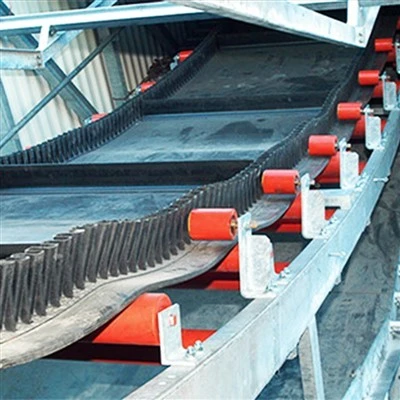
Don’t guess on your conveyor belt for cold storage. Trust the people who actually test these belts in freezers, not just at room temp. Reach out, and let’s figure out the right solution for you.
Sidewall Conveyor Belt References
- Association for Materials Handling Industry. Conveyor Belt Performance in Extreme Temperature Environments. 2022.
- Food and Drug Administration. Compliance Policy Guide: Section 555.200 – Substances Adjacent to Food. 2021.
- Rubber and Plastic News. Cold-Resistant PVC Compounds for Industrial Applications. 2023.
- International Society of Automation. Guidelines for Conveyor Belt Maintenance in Cold Storage Facilities. 2022.
Alumina Technology (Qingdao) New Materials Co., Ltd.
As one of the most professional pvc conveyor belt manufacturers and suppliers in China, we also support customized service. With abundant experience, we warmly welcome you to buy pvc conveyor belt for sale here and get quotation from our factory. For price consultation, contact us.
Address: No.448, Jiangshan South Road, Huangdao District, Qingdao City, Shandong Province
E-mail: Gloria.zhang@contitech.cn
WebSite: https://www.altechconveyorbelt.com/
