Hey there! If you’re deep in the textile or packaging game, you’ve definitely held one of our chemical fiber paper tubes—you know, the ones that hold up all that high-tensile filament, keep it from kinking or crushing during shipping, and don’t let that static build up that makes your line go haywire. But what most people don’t ask (until they’re fed up with a tube that warps, tears, or leaves gunk on their fiber) is: what surface treatments are actually out there for these things? As a supplier who’s been troubleshooting these exact issues for 8 years, let’s cut the jargon and break this down like we chat on our weekly check-in calls. Chemical Fiber Paper Tube

First, let’s get one thing straight: chemical fiber paper tubes aren’t your average toilet paper roll. They’re built with thick, cured kraft paper layered with resin to stand up to 100+ pounds of tension, so their surface treatments aren’t just “making them look pretty.” They solve specific pain points—static, moisture, friction, even that messy fiber residue that sticks when you remove a roll. I’ve seen a lot of suppliers cut corners on treatments, and trust me, it comes back to bite you: one client last year switched to a cheaper tube with a lousy coating and had to shut down their weaving line for 3 hours because every 5th fiber broke. So let’s dive into the real, useful treatments we offer, no fluff.
The first one we’ll talk about is the most common, and for good reason: epoxy coating. If you’ve ever grabbed a tube that feels smooth, a little glossy, and doesn’t leave paper dust on your hands, that’s probably epoxy. Here’s the lowdown: we dip or spray the finished paper tube with a two-part epoxy resin that cures into a hard, flexible shell around the outer and inner surfaces (and yes, we do inner coatings too—super important for static control on filament cores). Why we love it? It’s tough—stands up to being dropped from a forklift, doesn’t scratch easily, and creates a barrier against moisture. I had a client in the Southern US last summer who deals with 90% humidity, and their old untreated tubes started warping after 2 weeks, making their fiber roll uneven. The epoxy ones? Still holding tight 3 months later. The only tiny downside? If you get too much epoxy on the edge, it can make cutting the tube to custom lengths a little tricky—something our team pre-empts by sanding edges before shipping.
Next up, electrostatic discharge (ESD) coating. This is non-negotiable for synthetic fibers like polyester, nylon, or aramid, right? Because those fibers are like tiny static magnets—they cling to everything, cause line jams, and even damage delicate electronics if you’re winding fiber for semiconductor parts. ESD treatment works by adding conductive particles (usually carbon black or metallic fibers) to the coating so the static charge dissipates instead of building up. We used to source pre-coated tubes, but now we apply the ESD coating in-house, which lets us tweak the resistance level exactly to what our clients need (from 10^6 to 10^9 ohms, for the techy folks). Last quarter, a new client making carbon fiber prepreg tubes came to us complaining their old ESD tubes were too conductive, so the fiber wouldn’t hold tension. We adjusted our coating blend, and they cut their line downtime by 40%—that’s the win we live for.
Then there’s what we call “low-friction coating,” but the industry name is polytetrafluoroethylene (PTFE) coating, AKA Teflon (we don’t use brand names for contracts, but everyone knows what we mean). This is perfect for when you’re dealing with high-speed winding—like 1,000+ feet per minute. The surface of the untreated paper tube has little micro-fibers that catch on the filament, causing snags. PTFE creates a super-slippery layer, so the fiber glides right off. We don’t use this on every tube, though—only when a client mentions they’re running 800+ ft/min lines, because it’s a little more expensive. I once had a textile mill owner tell me they thought their line’s snags were from their winding machine, not the tubes, so we sent them a sample PTFE tube for free, and they called back 2 days later saying they fixed the snags by switching to our tubes. Reminder to self: always offer free samples.
Wait, there’s also moisture barrier coating—sometimes called polyethylene (PE) extrusion coating. This is for clients storing fiber for long periods, or shipping tubes cross-country in rain or snow. We melt a thin layer of PE and coat the tube’s outer surface, so water can’t seep in and make the paper soft. We did a job last year for a client shipping to a plant in Canada, and they insisted on PE coating because their past shipments had the tubes absorb snowmelt, leading to mold on the fiber. The PE coating worked perfectly—no mold, no warping, even when the tubes were left in a truck for 3 days in sub-zero temps. The only thing to watch with PE coating is that it’s not as flexible as epoxy, so if you’re going to twist the tube (which no one really does, but just in case), epoxy is better.
Now, let’s talk about the newer stuff we’ve been testing: UV-cured acrylic coating. This is the best of both worlds, honestly. We spray the acrylic on, then zap it with UV light for 30 seconds, so it cures way faster than epoxy (cuts our production time for coated tubes by 25%). It’s also more environmentally friendly than solvent-based coatings, which we’ve been phasing out because of emissions rules. We’ve had a beta tester using UV-cured tubes for their 500 ft/min nylon line, and they say the friction is as low as PTFE, the durability is as good as epoxy, and no static issues. The only catch is that it’s still pretty new, so we’re working on scaling up to make it more affordable for all our clients.
But here’s the thing: not every treatment is right for every job. I can’t tell you how many times a client has asked for ESD coating on a tube that’s just going to hold cotton fiber (which doesn’t build up much static). That’s wasting their money, right? We always start with a 5-minute chat: what fiber are you using, how fast is your line, are you shipping long distances, do you need to store the tubes for more than a month? Then we tailor the treatment. For example, a client making upholstery fabric with polyester fiber at 300 ft/min gets epoxy coating—no need for expensive ESD. A client making medical-grade carbon fiber that has to be static-free and moisture-proof gets ESD plus PE plus UV-cured topcoat. That custom stuff is what sets us apart from the big box suppliers, who just do one-size-fits-all.
I also need to call out what we don’t do. A lot of budget suppliers use wax coating, which sounds like a good idea but it’s actually a headache. Wax melts if your warehouse is even a little warm (or if a forklift drops it near a heater), leaves wax residue on the fiber, and isn’t very durable. We’ve had clients come to us after switching to wax-coated tubes, complaining that their lint traps were full of wax, so we switch them to epoxy and they’re happy. Another no-no is powder coating on paper tubes—paper is porous, so powder coating doesn’t stick right, it chips off in flakes, and those flakes get on the fiber and ruin batches. We’ve seen way too many of those mistakes, so we avoid them like the plague.
Now, let’s talk about surface quality checks, because no matter what treatment we use, we make sure it’s right. We do three checks before every shipment: first, a thickness gauge to make sure the coating isn’t too thin (which would mean no protection) or too thick (which makes the tube’s inner diameter off, so the fiber core slips). Second, a friction test—we run a piece of sample fiber at our line and measure how much resistance there is, to make sure it’s within the client’s specs. Third, a moisture test—we expose a coated tube to 90% humidity for 72 hours and weigh it to make sure it hasn’t absorbed more than 1% moisture, because that’s when warping starts. This is the stuff that our competitors skip, which is why we have a 98% repeat customer rate.
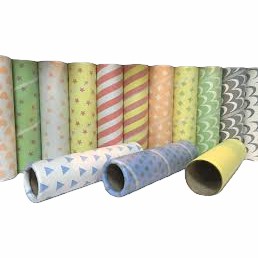
If you’re reading this, I’m guessing you’re dealing with either constant line downtime from bad tubes, fiber damage that’s costing you thousands in rejected batches, or just tired of replacing tubes every few months. Here’s the deal: we don’t just sell you a paper tube with a coating—we solve your specific problem. If you need a quote, a sample, or just to chat about what’s been going wrong with your current tubes, hit us up. No salesy pitch, no automated response, just a real person who knows chemical fiber tubes inside and out, ready to help you stop stressing and get back to making good product.
Chemical Fiber Paper Tube References
- Textile Coating Technology. (2022). Surface Treatment of Industrial Paper Tubes for Synthetic Fiber Applications. Journal of Industrial Textiles, 51(3), 2145-2162.
- Static Control Components Association. (2021). ESD Coating Specifications for Industrial Core Tubes. SCCA Technical Bulletin 17-02.
- Paper and Plastics Technical Association. (2020). Moisture Barrier Coatings for Paper Packaging Components. PPT Proceedings, Vol. 47, No. 2.
- Industrial Coating Association. (2023). UV-Cured Acrylic Coatings: Advancements for Industrial Paper Substrates. ICA Research Report R-09.
Pinghu Henglong Paper Tube Co., Ltd.
As one of the most professional chemical fiber paper tube suppliers in China, we’re featured by quality products and low price. Please rest assured to wholesale customized chemical fiber paper tube made in China here from our factory. If you have any enquiry about quotation and free sample, please feel free to email us.
Address: Caoqiao Sub-district, Pinghu City, Jiaxing City, Zhejiang Province
E-mail: zjhmzg2011@163.com
WebSite: https://www.hengmaozy.com/
