If you’ve ever walked through a small fabrication shop, I bet you’ve paused to watch someone at a workbench, two metal pieces clamped tight, and a spark of light that only lasts a fraction of a second—but fuses those pieces solid. That’s spot welding, a process I’ve dealt with every single day for the last 12 years, ever since I started out as a young apprentice in my family’s welding supply business before growing into a full-time welding machine supplier. The question I get asked most often, by hobbyists just setting up their garage workshops and by small fabrication owners looking to upgrade, is this: Can a standard welding machine be used for spot welding? Let me break this down, not just as a technical answer, but as someone who’s seen what works (and what costs people money) in real shops. Welding Machine

First, let’s start with the basics, because I’ve found a lot of folks mix up spot welding with other welding processes. Spot welding is a resistance welding method, right? It works by passing a massive, controlled electric current through two overlapping metal sheets, clamped tightly between two copper electrodes. The resistance between the metal sheets (that’s the key physics here) generates localized heat, melting the metal at the contact point, and the pressure from the electrodes squeezes the melted metal into a solid, tight bond—all in less than a second, usually. That’s way different from MIG welding, TIG welding, or stick welding, where you feed filler metal along a continuous arc to build a joint over time.
Now, the big question: Can you use your standard MIG or TIG machine for spot welding? The short answer is: Sometimes, but only if you make the right adjustments, and it won’t be as reliable or as strong as a dedicated spot welder. Let’s get into why. A standard welding machine, say a common MIG unit hobbyists pick up for home projects, is designed to deliver a continuous, adjustable current over a longer period—think seconds, not milliseconds. Spot welding needs an extremely high current, but for a very short duration (typically 0.1 to 0.5 seconds for thin metals), paired with precise pressure from the electrodes. Most standard MIG machines can’t deliver that short, high-current pulse; they’re built for steady current, so you’ll end up with too much heat for too long, burning through thin sheets instead of forming a solid spot, or not enough heat to melt the metal at all.
That said, I’ve seen guys in small workshops rig their MIG machines to do basic spot welding for thin gauge steel (like 18-gauge, the stuff used for car body panels or small metal shelves) when they don’t want to buy a separate spot welder. Here’s how they do it: They take the MIG gun’s nozzle and replace it with a pair of copper spot-welding electrodes, like small, rounded copper tips that fit tight against the metal. Then they install a simple timer—you can pick up a basic 120-volt relay timer for under $20 at any hardware store—that cuts the current to the MIG machine after a set, short time, instead of letting it run continuously. They also crank up the MIG’s current to its maximum setting, because they need that surge of power. But let’s be clear: This is a band-aid solution. I’ve had more than one customer bring in a MIG machine they tried to rig for spot welding, complaining that every other spot is weak, or that they burned three sets of electrodes in a week because they weren’t calibrated right. The problem is standard welding machines aren’t built for the specific resistance welding physics of spot welding. They don’t control electrode pressure accurately, which is half the spot welding equation—too little pressure and the heat escapes, too much and you push all the melted metal out of the joint.
So, what’s a dedicated spot welder, and why is it different? Dedicated spot welders are purpose-built for resistance welding, specifically spot welding. They use step-down transformers that can deliver a much higher current (often thousands of amps, versus a standard MIG’s 100-200 amps) for that exact short pulse. They also have precision, spring-loaded or pneumatic electrode arms that deliver consistent, adjustable pressure every time—no guesswork, no burning through metal. Some of the more advanced models, which we supply to fabrication shops and auto body shops, even have programmable timers that let you adjust pulse duration, current, and pressure for different metal thicknesses, from 24-gauge sheet metal to 1/4-inch steel plate.
But wait, there’s a case where a standard welding machine can do spot welding really well: if it’s a multi-process machine that has a resistance welding setting, or if you’re working with very specific thin metal applications. A few years back, I had a customer who made custom bird feeders from 20-gauge aluminum. He had a high-end TIG machine that had a “pulse” setting, and he was able to adjust the pulse width down to 0.2 seconds, enough to form a spot without burning through the aluminum. That worked for his small, low-volume jobs, but once his business grew to supplying local garden stores, he upgraded to a dedicated mini spot welder we stock, because he needed 50+ spot welds an hour, and the TIG rig couldn’t keep up without overheating.
Another thing I see people get wrong: spot welding works best on conductive, non-ferrous metals, but not all metals are equal. You can spot weld steel (both mild steel and stainless steel) really well, that’s what most auto body and sheet metal shops do. Aluminum is trickier, because it has higher electrical conductivity and melts at a lower temperature, so you need a dedicated spot welder with higher current output to get a good bond. Copper is even trickier, because it’s super conductive—only specialized resistance spot welders can handle copper reliably, standard welding machines just can’t deliver enough concentrated heat fast enough.
I’ve had too many customers come to me after wasting money on cheap hacks: “I used my MIG welder for spot welding and ruined a whole batch of door panels.” Let’s break down the risks of rigging a standard machine for spot welding, because it’s not just a hassle, it’s a safety and cost issue. First, overheating: A standard welding machine running at maximum current for short pulses is going to run hotter than it’s designed for, shortening its lifespan by years, not months. I’ve replaced MIG power supplies for customers who tried spot welding with them, and the cost of that replacement is way more than the cost of a basic dedicated spot welder. Second, inconsistent weld quality: If you’re using a homemade timer and makeshift electrodes, one spot might be perfect and the next might break when you tap it with a hammer, which is a huge problem if you’re building something that has to hold up. Third, safety: Welding machines produce high voltage, and rigging them without proper insulation or pressure controls can lead to electrical shocks, or sparks that start fires if you’re working in a cluttered shop.
Now, here’s the good news: You don’t have to spend $5,000 on an industrial spot welder to get professional results. For small hobbyists or one-man shops working with thin metals, the basic dedicated spot welders we supply are around $800-$1,200, and they’re plug-and-play—no rigging, no guessing, just set the timer and pressure for your metal, and you get consistent, strong spots every time. For medium to large fabrication shops, we have mid-range models that can handle higher volumes and thicker metals, with programmable settings so you can switch between jobs in seconds.
Let me share a real example from a customer of mine, a small auto body shop in Cleveland that came to me two years ago. They were using a beat-up old MIG machine to do spot welding on classic car body panels, and they were going through 10-12 sets of electrodes a month, had to re-weld 20% of their spots because they were weak, and lost a couple of jobs when clients noticed their welds were uneven. They invested in a basic semi-automatic spot welder we carry, and in the first month, they cut their electrode costs by 70%, only had to re-weld 2% of spots, and finished jobs 30% faster because they didn’t have to fumble with rigging their MIG anymore. That’s the kind of result you can’t get with a standard welding machine, no matter how hard you try to adjust it.
I know money is tight for small businesses and hobbyists, and the urge to repurpose what you already have is strong. But when it comes to spot welding, the old saying holds: you get what you pay for. A standard welding machine is built for arc welding, which is a different process entirely, and trying to turn it into a spot welder is like using a screwdriver to hammer a nail—it works in a pinch, but you’ll end up damaging both tools and your project.
If you’re wondering whether a welding machine you already own can do spot welding, ask yourself: What kind of jobs am I doing? Am I working with very thin gauge steel, low volume, and willing to deal with inconsistent results and faster wear on my machine? If so, a rig with a timer might work for a small handful of projects, but if you’re serious about quality, speed, and not wasting money, you’ll be better off investing in a dedicated spot welder. And if you’re not sure which machine is right for your specific needs—whether you’re a hobbyist building custom metal art or a shop fabricating industrial parts—reach out to our team to talk through your requirements. We’ve worked with everyone from first-time workshop owners to large manufacturing facilities, and we can help you pick a machine that fits your budget and your projects, no guesswork required.
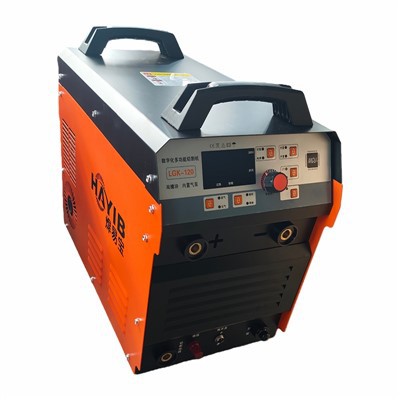
At the end of the day, welding is all about strong, reliable joints, and that starts with using the right tool for the job. I’ve seen too many good projects ruined by someone trying to cut corners by using the wrong machine, and too many good businesses lose jobs because their welds don’t hold up. Spot welding is a specific process that requires specific equipment, and while you can rig a standard welding machine for basic spot welding in a pinch, it’s not a long-term solution that will save you time, money, or frustration. If you’re ready to upgrade your welding setup for spot welding that’s consistent, fast, and built to last, we’re here to help you find the right solution for your needs.
Plasma Cutting Machine References
- American Welding Society. (2021). Resistance Welding Processes and Applications. AWS Publishing.
- Lancaster, J.F. (2010). Metallurgy of Welding and Weldability. Woodhead Publishing.
- Welder Supply Industry Association. (2022). Resistance Welding Equipment Performance Standards. Welding Industry Standards Council.
Anhui Jiashibao Welding Technology Co., Ltd.
We are one of the most experienced welding machine manufacturers in China, specialized in providing high quality customized products with low price. Please feel free to buy discount welding machine from our factory. For quotation and free sample, contact us now.
Address: No. 10 Fengting Road, Shuangfeng Economic Development Zone, Changfeng County, Hefei City, Anhui Province
E-mail: ahhyb2287@163.com
WebSite: https://www.hybcp.com/
