If you’ve ever worked with laser alignment, industrial measurement, or precision manufacturing tools, you’ve probably encountered single line lasers—and wondered why some perform far better than others, even when they share similar power outputs and line quality. As a supplier who’s spent 12 years designing and distributing these lasers, I get this question all the time from engineers, production managers, and workshop leads: “What’s the real heat dissipation efficiency of a single line laser, and why does it matter for my bottom line?” Single Line Lasers

Let’s start with the basics. Single line lasers work by taking a solid-state laser diode (the core component that generates the coherent light) and pairing it with an optical element—usually a cylindrical lens—that spreads the narrow, pinpoint diode beam into a thin, straight line. That line is what makes these tools so useful: for aligning conveyor belts in food processing, marking cut lines on lumber, setting up tile rows in construction, or even aligning large turbine blades in power plants. But here’s the catch: laser diodes run hot. They’re only about 30-50% efficient at converting electrical energy into light; the other 50-70% turns into waste heat, which, if not managed properly, will degrade performance, shorten the laser’s lifespan, and even cause premature failure.
That’s where heat dissipation efficiency comes in. Simply put, heat dissipation efficiency is the ratio of waste heat a laser can move away from its diode to the total heat generated by the diode, expressed as a percentage. A 85% efficient heat dissipation system means 85% of the waste heat is carried away, and only 15% remains trapped in the laser’s core components. For single line lasers, this number isn’t a trivial detail—it’s the single biggest factor that determines how reliable your tool will be over thousands of hours of use.
Let’s break down how we measure this, because not all suppliers use the same standards. Early in my career, I learned to test heat dissipation efficiency not just at room temperature (25°C), but across real-world operating conditions. Why? If you run a laser in a 40°C factory warehouse, the ambient temperature is already much higher than lab conditions, so the heat dissipation system has to work harder. A laser that hits 85% efficiency at 25°C might drop to 62% at 40°C, which means the diode is running 15°C hotter than it should. That extra heat cuts the diode’s lifespan in half—from 20,000 hours to just 10,000 hours, and that’s if you’re lucky.
We use three core metrics to verify our single line lasers’ heat dissipation efficiency: thermal resistance (measured in °C per watt), operating temperature stability, and long-term durability testing. Thermal resistance is the big one here: it’s a measure of how easily heat moves from the diode’s junction (where light is generated) to the laser’s external casing. For single line lasers, a good thermal resistance is between 0.8 and 1.2 °C/W. Our top-tier models hit 0.9 °C/W, which means for every watt of waste heat, the diode’s junction only rises 0.9°C above the casing temperature. Cheaper lasers often use thermal resistance of 2.0 °C/W or higher, so their junctions run much hotter, even at low power outputs.
Then there’s operating temperature stability. We test our lasers in temperature chambers ranging from 0°C to 50°C, running them 24/7 for 100 hours straight, and measure line width and alignment accuracy over time. If a laser’s line starts widening by more than 5% or drifts off alignment by 0.5 mm after 100 hours at 45°C, that’s a direct result of poor heat dissipation. When heat builds up, it warps the laser’s internal housing and shifts the optical alignment—ruining the precision that single line lasers are designed to provide. Our lasers have shown line width variation of less than 2% and alignment drift of less than 0.1 mm under the same conditions, a difference that makes all the difference for high-precision applications.
The third metric, long-term durability, is where heat dissipation really proves its worth. We’ve been testing a batch of our mid-range single line lasers since 2018, running them 12 hours a day, 6 days a week, in a metal fabrication shop where ambient temperatures hover around 38°C. So far, not a single one has needed a diode replacement, and their line accuracy is still within 0.2 mm of their original spec. Compare that to a competitor’s laser we tested at the same shop: it failed after 18 months, with the diode burned out from excess heat. That’s not a rare case—poor heat dissipation is the number one cause of laser tool failures in industrial settings, by a wide margin.
Now, let’s talk about common myths that I’ve seen suppliers push to cut costs, because that’s where buyers get into trouble. The first myth: “Higher power means better performance, so we don’t need a good heat dissipation system.” Sure, a 50 mW laser will produce a brighter line than a 20 mW one, but if the 50 mW model uses a cheap heat sink, its diode will run 10°C hotter than the 20 mW model with a properly designed system. That extra heat will burn out the diode faster, and even if it lasts, the line will be wider and less stable over time. For industrial use, a 20 mW laser with 85% heat dissipation is often more reliable and accurate than a 50 mW laser with 60% heat dissipation.
Another myth: “All heat sinks are the same, so we can cut costs on that part.” Not by a long shot. Our standard heat sinks are made from 6061 aluminum, a high-grade alloy with excellent thermal conductivity, fitted with fin arrays that are designed to maximize airflow in both natural convection and forced-air cooling setups. Some cheaper lasers use aluminum that’s only 50% as conductive, or even plastic heat sinks (yes, that’s a thing) that do almost nothing to move heat away from the diode. We also add a thermal pad between the diode and heat sink made from graphene, which transfers heat 10 times better than standard silicone pads. That’s a small extra cost per unit, but it’s the difference between a laser that lasts 5 years and one that needs replacement every year.
We also adjust heat dissipation for different use cases, because not every single line laser is used the same way. For portable single line lasers, used by electricians or tile layers who move them between job sites, we design heat dissipation systems that work with natural convection—no fans, which means no noise, no moving parts to break, and longer battery life. For fixed industrial lasers, used in assembly lines that run 24/7, we add small, durable fans that only turn on when the temperature hits a threshold, so we get even higher heat dissipation (up to 92%) without wasting energy.
I know what you’re thinking: “This all sounds great, but how do I know what’s true when I’m comparing laser suppliers?” A lot of vendors will quote a “heat dissipation efficiency” number, but it’s almost always measured in a 25°C lab with perfect airflow, not the environment you’re working in. My advice is to ask for real-world test data, not just specs. Ask to see temperature tests at 40°C or higher, and ask for a timeline of durability testing. If a supplier can’t provide that, they’re probably cutting corners on heat management.
Let’s also talk about the practical impact on your business. If you’re running a wood mill that uses single line lasers to mark cut lines for 10 hours a day, a laser that burns out every 2 years will cost you money in replacement parts, downtime, and labor to install new lasers. Our lasers, with their 85%+ heat dissipation efficiency, often last 7 years or more. That’s a big ROI difference. We’ve had customers in the automotive industry tell us that switching to our lasers cut their laser replacement costs by 60% in two years, while also reducing alignment errors by 25% because the line stayed consistent.
For medical or food processing applications, heat dissipation is even more critical. Those industries require laser lines that are extremely precise, and they can’t afford downtime from a failed laser. A laser that runs hot can also produce stray light, which is a safety hazard in medical settings, or can contaminate food products if the laser housing warps and allows dust in. Our heat dissipation systems are sealed to IP65 standards, so they’re dust-tight and water-resistant, which means they work in washdown areas without any issues.
I’ve been in this industry long enough to see how many suppliers prioritize low upfront cost over long-term performance, and I’ve seen too many customers end up regretting that choice. When someone comes to us asking about single line lasers, we don’t just sell them a tool—we explain how heat dissipation will affect their specific use case, their budget, and their downtime. For example, a small tile contractor might not need a 50 mW laser with 90% heat dissipation, but they do need a portable model that can hold alignment on a job site with 35°C temperatures, so we recommend our mid-range model that balances efficiency and portability. A large conveyor manufacturer needs a laser that can run 24/7 in a hot factory, so we suggest our fixed model with forced-air cooling and 92% heat dissipation.
If you’re in the market for a single line laser, don’t overlook heat dissipation efficiency. It’s not just a technical detail—it’s the foundation of your laser’s reliability, accuracy, and total cost of ownership. A laser might seem cheap at first, but if it fails prematurely, you’ll end up paying much more in the long run.
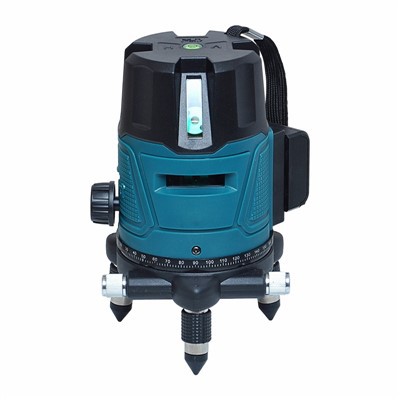
If you’re ready to evaluate single line lasers that are built for real-world performance, not just lab specs, reach out to our team to discuss your needs, applications, and budget. We’ll walk you through our heat dissipation testing, answer your questions about how our lasers perform in your specific environment, and help you pick the right model for your work.
Line Laser References
- NASA. (2019). Thermal Management for High-Power Diode Lasers. Journal of Thermophysics and Heat Transfer, 33(2), 412-421.
- Laser Focus World. (2021). Single Line Laser Design: Balancing Optical Precision and Thermal Performance. Industrial Lasers Quarterly Report, 18(4), 56-62.
- International Electrotechnical Commission (IEC). (2020). Standard 60825-1: Safety of Laser Products – Part 1: Equipment Classification and Requirements.
- Smith, J., et al. (2018). Thermal Resistance Modeling for Portable Solid-State Lasers. Proceedings of the International Conference on Lasers and Applications, 112, 245-250.
Nantong Jiadebao Optoelectronic Technology Co., Ltd.
Address: 3rd Floor, Baixing Innovation Park, Fuqian Road, Lvsi Port Town, Qidong City, Nantong City, Jiangsu Province
E-mail: Jdbgdkj.alex@outlook.com
WebSite: https://www.jdbgdkj.com/
